


Why are Purple Martins dependent on humans?
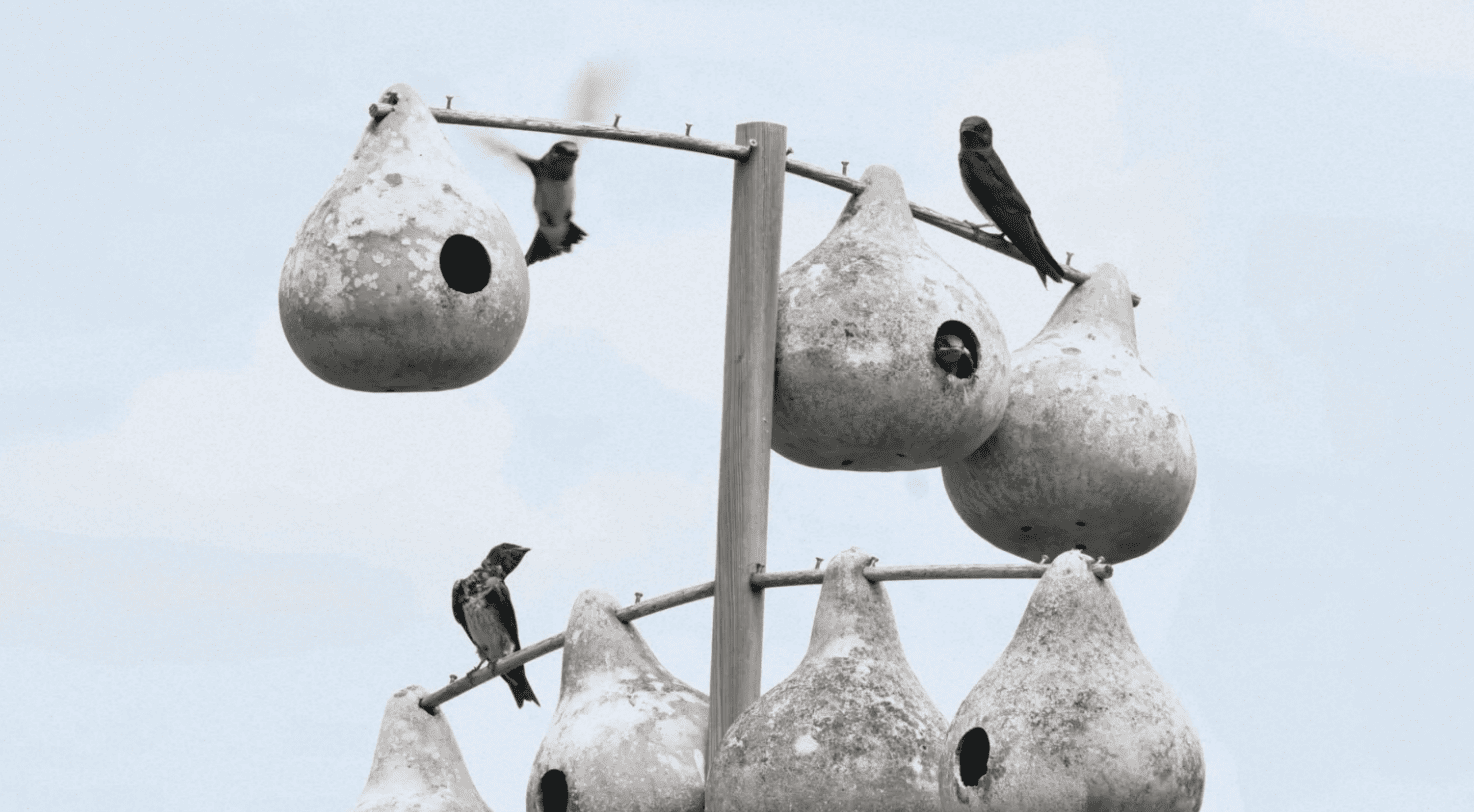
Purple martins east of the Rocky Mountains are almost entirely dependent on human-made nesting structures — commonly called purple martin houses — to reproduce successfully.
As breathtaking as the swirling skies above Bomb Island are, the reality beneath the beauty is fragile.
Purple martins share one of the most unique relationships between wildlife and humans in North America. Thousands of years ago, Native American communities discovered that these birds consumed vast numbers of flying insects that threatened crops. In exchange, people began hanging hollow gourds and wooden housing to provide safe nesting sites.
Over generations — tens of thousands of bird lifetimes — the species adapted.
Today, an estimated 95–98% of the eastern purple martin population cannot nest without human-provided housing.
What role does Bomb Island play?
Bomb Island is not a nesting site.
It is a pre-migratory roost.
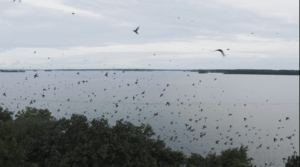
After nesting season ends and young birds fledge, purple martins from across South Carolina, North Carolina, Virginia, and beyond converge here. They feed heavily, socialize, and prepare for the long migration to South America.
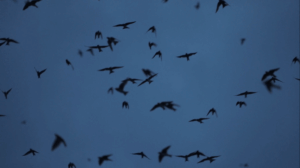
At peak moments, Bomb Island may host up to 10% of the global purple martin population — an astonishing concentration for a single location.
That scale makes Bomb Island extraordinary.
It also makes it vulnerable.
Why conservation here matters
Despite their dependence on humans, purple martin populations are declining due to:
-
Habitat loss
-
Pesticide use reducing insect populations
-
Invasive bird species
-
The disappearance of traditional birdhousing in neighborhoods
Some conservation groups estimate population declines of up to 40% in recent decades.
This is why education matters as much as protection.
👉 Learn how to help directly through the Purple Martin Conservation Association
🔗 https://bit.ly/PurpleMCA/
There you can:
-
Learn how to build or maintain a purple martin house
-
Support habitat conservation initiatives
-
Participate in citizen science and migration tracking
How MadLad Films approaches conservation storytelling

At MadLad Films, conservation stories are treated with the same care as brand campaigns and marketing videos. Through outdoor filmmaking, the goal is to create emotional connection first — because people protect what they understand.
This film wasn’t about spectacle alone.
It was about responsibility.
By combining cinematic visuals with educational clarity, MadLad Films produces marketing videos and documentaries that help audiences see their role in protecting the natural world.
🎬 Watch The Mystery of Bomb Island on MadLadTV:
👉 https://madladfilms.com/portfolio/the-mystery-of-bomb-island-the-purple-martin-phenomenon/
📩 Have a conservation story or outdoor project worth telling?
👉 Contact MadLad Films
🔗 More Stories from MadLad Films – One day. Real cowboys. No script.
👉 https://madladfilms.com/portfolio/24-hours-with-real-cowboys-did-we-make-it/
🎬 Episode Crew
🎥 Produced, Filmed & Edited by MadLad Films
MadLad Films Instagram – https://bit.ly/MLFinstagram
Website – https://bit.ly/MadLadFilms
#MadLadFilms #MadLadTV #JeepGladiator #AdventureJeep #Overlanding #JeepLife #4×4 #OffRoad #OverlandBuild #JeepMods #TrailRig #GladiatorBuild #JeepNation #BFGoodrich #RacelineWheels #FabtechSuspension #DanaSpicer #FabFours #RockSlideEngineering #BoostAuto #WARN #Factor55 #RuggedRadios #ROAMAdventureCo #OverlandPros #RVMP